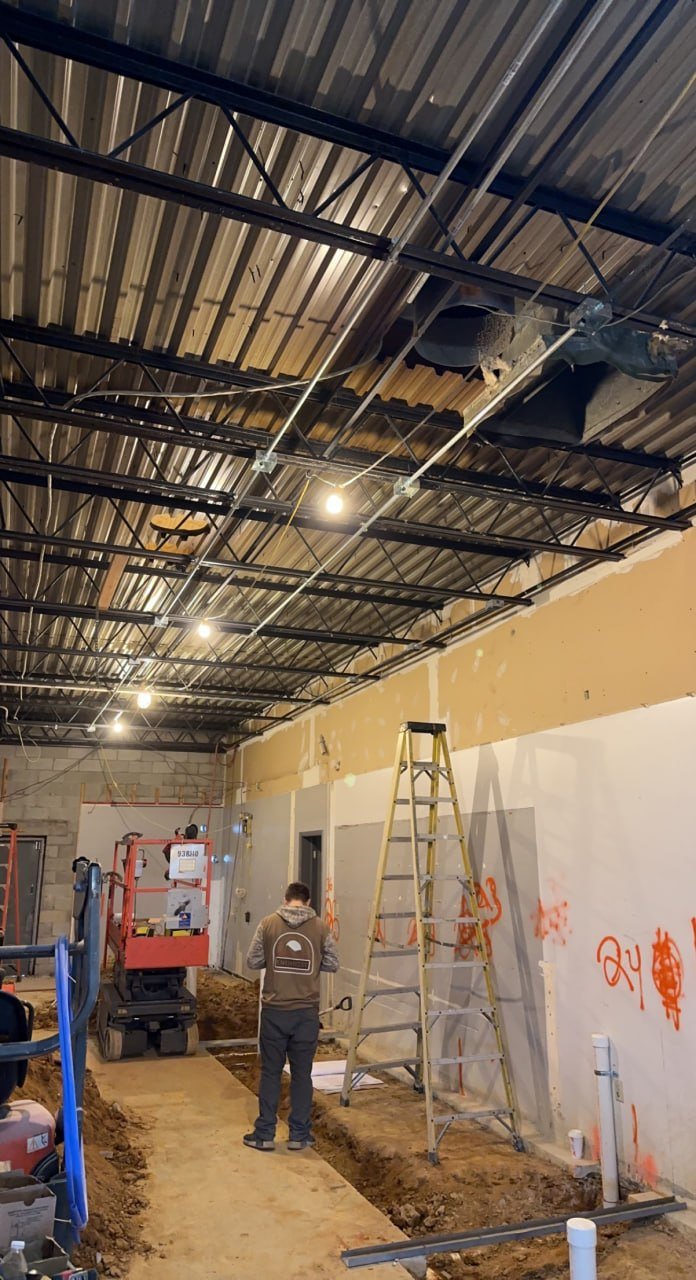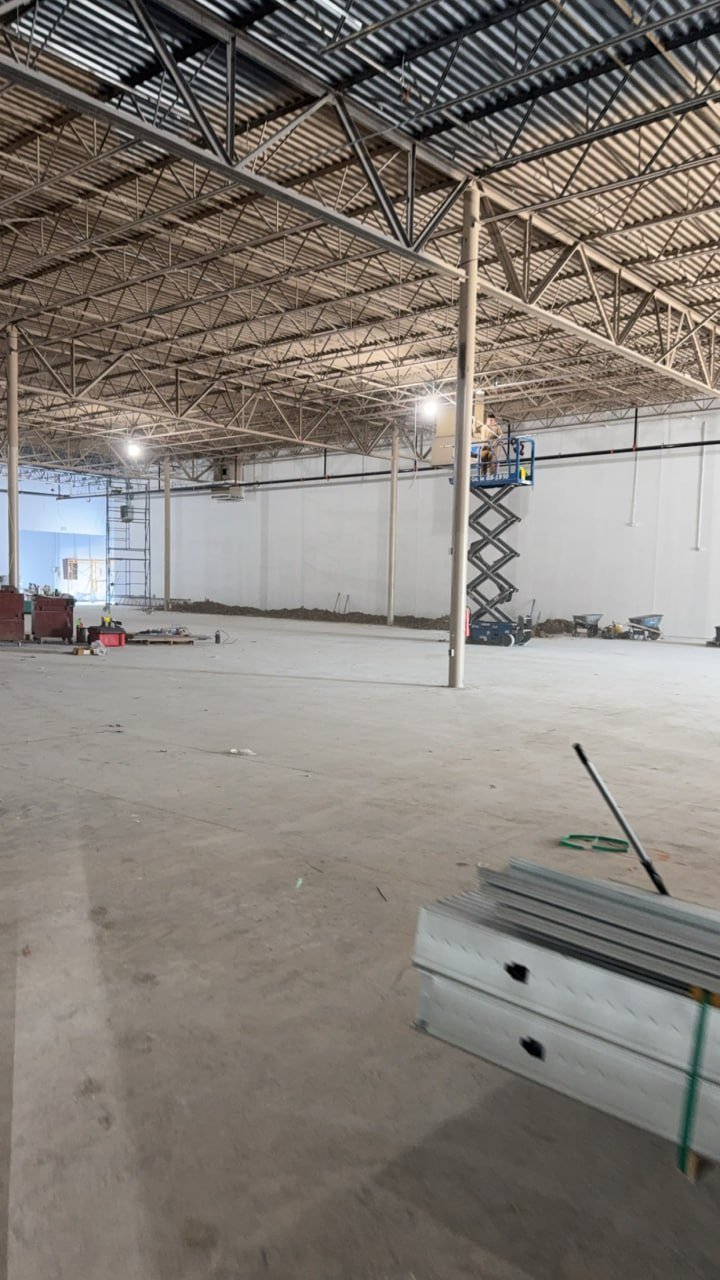
A 400-amp service upgrade is rarely about today. It is about the tenant improvement you have not signed yet, the compressor you will add in year two, and the EV chargers your lease applicants have started asking about. The question is not “can we get by on 200A” — it is whether getting by is cheaper than doing the service work once, while the trench is already open.
Start with a demand study, not a hunch
NEC Article 220 load calculations set the floor, but for an operating business the more honest number comes from NEC 220.87: with 30 days of recorded demand data (a year where heating and cooling both appear is better), you can base the calculation on 125% of the actual maximum demand. We regularly meter buildings whose owners assume they are out of capacity and find 60 amps of headroom — and the reverse. A metering study costs a fraction of service work and turns the entire conversation from opinion into arithmetic.
What actually changes at 400 amps
Crossing from 200A to 400A moves several things at once, and each has lead-time and coordination implications under NEC Article 230 and your utility’s service standards:
- Metering. Many utilities move you from self-contained metering to a CT (current transformer) cabinet at this size — different equipment, different wall space, and the utility’s spec sheet, not the catalog, decides what is acceptable.
- Conductors and raceway. Parallel conductor runs become normal at 400A. Conduit fill, termination temperature ratings, and available fault current all get re-checked rather than assumed.
- Distribution. A 400A service usually means a new distribution board with real spare capacity — the point of the project is the breaker spaces you do not fill on day one.
- Utility scope. Transformer capacity, secondary conductors, and sometimes primary work sit on the utility side of the service point. Their engineering queue — not your electrician — is usually the schedule’s critical path, and it can run months in parts of our PA/MD/DE territory.
Sequencing the cutover around your operation
The physical cutover is a planned outage, and for an operating business the plan matters more than the wire. The pattern that works: new service equipment set and inspected next to the old, utility disconnect scheduled for the operation’s quietest window, circuits migrated in prioritized order with refrigeration and IT first back on, and a documented as-built so the next tenant fit-out does not start with archaeology. Done this way, most businesses lose part of one day — not a week.
When 400A is the wrong answer
Honest scoping cuts both ways. If the driver is one new load — a single machine, a pair of EV chargers — load management under the existing service is often smarter money: NEC-recognized energy management systems can hold a new load within existing capacity, and demand-side scheduling sometimes solves what looked like a capacity problem. The metering study tells you which side of the line you are on. Our commercial services page covers service upgrades, distribution, and metering studies in more detail, and the same demand logic applies to heavy residential projects — see our EV charger guide for the household version of this conversation.
Planning growth for a warehouse, retail space, or light-industrial building anywhere in our Pennsylvania, Maryland, or Delaware service area? Start with a conversation — and if the honest answer is “your service is fine,” that is what you will hear.
General information for planning purposes. Code references are to recent NEC cycles; your adopted local edition, amendments, and utility service standards govern.